

Did you know that UK homes account for nearly one fifth of the country’s total carbon emissions? As pressure mounts to create more energy-efficient housing, understanding how buildings use and conserve energy becomes vital for homeowners and property professionals alike. By using advanced energy simulation, experts now have powerful tools to predict energy performance, cut costs, and reduce environmental impact across new builds and existing homes.
Table of Contents
- Energy Simulation In Housing Explained
- Key Types Of Energy Simulation Models
- How Home Energy Model (Hem) Works
- Role Of Energy Performance Certificates (Epcs)
- Compliance, Costs, And Common Pitfalls
Key Takeaways
| Point | Details |
|---|---|
| Energy Simulation Importance | Energy simulation enables accurate predictions of energy performance, allowing for informed decision-making regarding energy efficiency in housing. |
| Home Energy Model (HEM) | HEM revolutionizes energy assessment by integrating complex variables, yielding nuanced insights into a building’s thermal efficiency and carbon footprint. |
| Energy Performance Certificates (EPCs) | EPCs provide essential data on energy efficiency and recommended improvements, serving as crucial tools for compliance and sustainable property management. |
| Compliance and Cost Considerations | Understanding regulatory requirements and budgeting for energy assessments is vital for property owners to avoid penalties and enhance property value through energy upgrades. |
Energy Simulation in Housing Explained
Energy simulation represents a sophisticated computational approach designed to model and predict the energy performance of residential buildings. According to the UK Government, this methodology provides critical insights into how homes consume, conserve, and potentially generate energy across different scenarios and environmental conditions.
At its core, energy simulation utilises advanced computational techniques to replicate the complex thermal and energy dynamics within a housing structure. These digital models incorporate multiple variables including architectural design, insulation properties, heating systems, ventilation configurations, and occupant behaviour patterns. By creating these detailed virtual representations, professionals can accurately predict energy consumption, identify potential efficiency improvements, and estimate potential carbon emissions before actual construction or retrofitting occurs.
The Home Energy Model (HEM) is set to revolutionise how energy performance is assessed in UK residential properties. Unlike traditional assessment methods, HEM provides a more nuanced and comprehensive approach to understanding a building’s energy characteristics. Key features of this advanced simulation approach include:
- Precise thermal performance mapping
- Dynamic occupancy behaviour modelling
- Comprehensive energy consumption predictions
- Detailed carbon emission estimations
- Identification of potential energy efficiency interventions
By leveraging sophisticated computational algorithms, energy simulation transforms abstract energy concepts into tangible, actionable insights for homeowners, developers, and environmental professionals. The ability to predict and optimise energy performance represents a crucial step towards creating more sustainable, efficient, and environmentally responsible housing solutions in the United Kingdom.
Key Types of Energy Simulation Models
Energy simulation models represent sophisticated analytical frameworks designed to evaluate and predict the energy performance of residential and commercial buildings. Cambridge Housing Model exemplifies one critical approach, offering detailed insights into energy consumption and carbon emissions by leveraging comprehensive housing survey data and advanced computational techniques.
The primary types of energy simulation models can be categorised into several distinct methodological approaches:
Here’s a comparison of key energy simulation model types:
| Model Type | Main Characteristics | Typical Applications |
|---|---|---|
| Steady-State Models | Constant conditions Simplified results |
Quick assessments Baseline info |
| Dynamic Thermal Simulation | Real-time variations Detailed dynamics |
Complex buildings Retrofits |
| Probabilistic Performance | Statistical variation Risk analysis |
Scenario planning Uncertainty |
-
Steady-State Models: These models assume consistent environmental conditions and provide baseline energy performance assessments. They offer quick, simplified calculations but may overlook dynamic thermal variations.
-
Dynamic Thermal Simulation Models: More complex and comprehensive, these models account for real-time environmental changes, occupant behaviour, and intricate thermal interactions within building structures.
-
Probabilistic Performance Models: These advanced approaches incorporate statistical variations and uncertainty analysis, providing probabilistic predictions about potential energy consumption scenarios.
The Home Energy Model (HEM) represents a significant advancement in energy performance assessment. Unlike traditional methodologies, HEM offers a more nuanced approach by integrating multiple variables such as:
- Detailed thermal performance analysis
- Comprehensive occupancy behaviour modelling
- Advanced carbon emission estimations
- Dynamic environmental condition simulations
Each simulation model serves a unique purpose, enabling building professionals, energy consultants, and policymakers to make informed decisions about energy efficiency, retrofitting strategies, and sustainable design interventions.
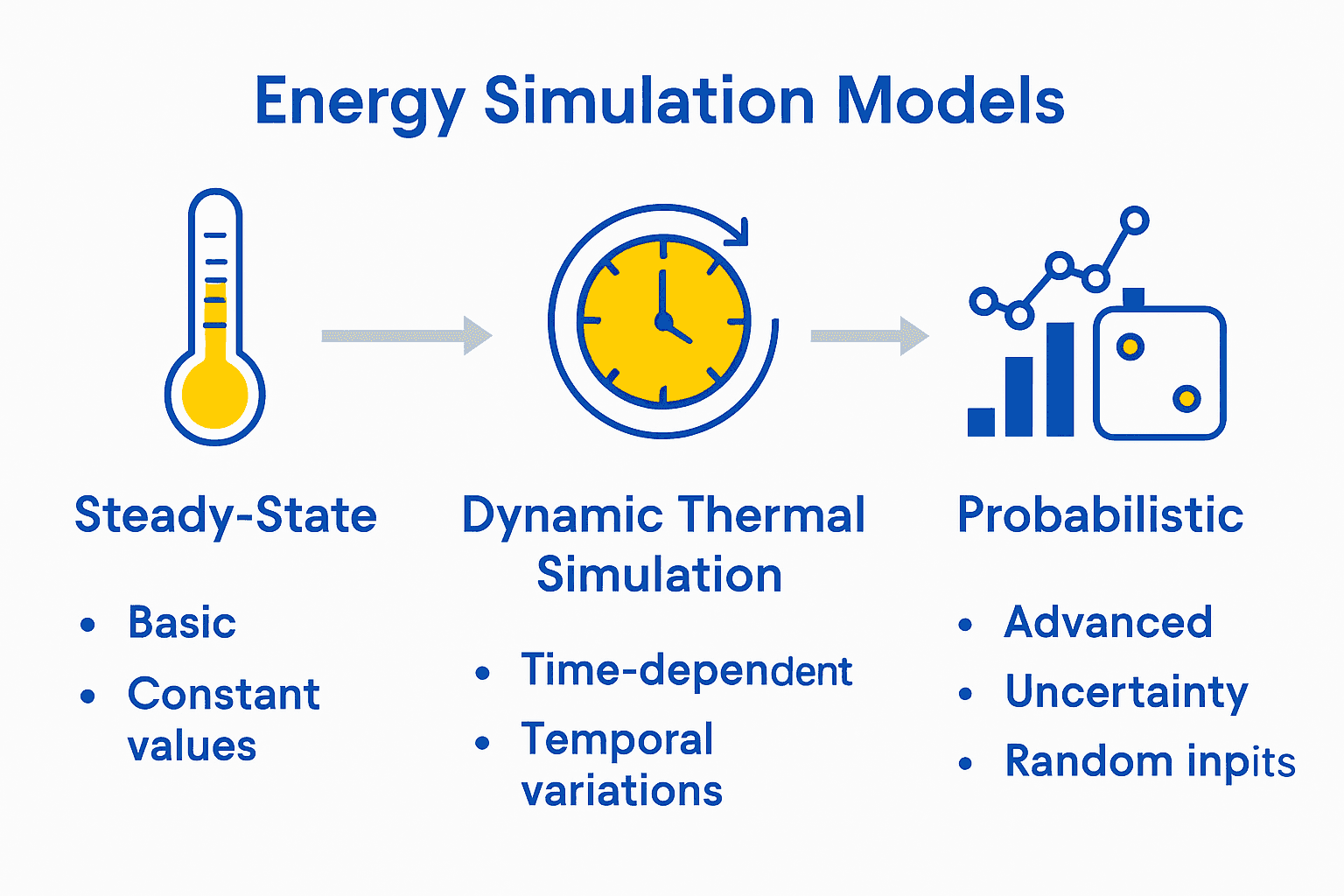 By understanding these different modeling approaches, stakeholders can select the most appropriate method for their specific assessment requirements.
How Home Energy Model (HEM) Works
The Home Energy Model (HEM) represents a sophisticated computational methodology for assessing residential energy performance. UK Government Technical Documentation reveals that HEM operates through a comprehensive simulation approach, analyzing intricate interactions between building physics, occupancy patterns, and energy systems.
Key Computational Components of the Home Energy Model include:
- Building Fabric Analysis
- Thermal insulation properties
- Wall, roof, and floor construction details
- Window and door heat transfer characteristics
- Energy Systems Evaluation
- Heating system efficiency
- Cooling and ventilation mechanisms
- Renewable energy integration potential
- Occupancy Behavior Modeling
- Daily energy consumption patterns
- Temperature preference tracking
- Individual room utilization analysis
The simulation process involves creating a detailed digital representation of a residential structure, mapping every thermal and energy-related characteristic with unprecedented precision. Each model generates multiple scenario predictions, allowing professionals to understand potential energy consumption variations under different environmental and usage conditions.
By incorporating advanced algorithms and solar calculation methodologies, HEM provides a dynamic framework for understanding residential energy performance.
 Stakeholders can leverage these insights to develop more sustainable housing solutions, optimize energy efficiency, and make informed decisions about building design, retrofitting, and environmental impact reduction.
Role of Energy Performance Certificates (EPCs)
Energy Performance Certificates (EPCs) serve as critical documents providing comprehensive insights into a property’s energy efficiency and potential environmental impact. UK Government explains that these certificates offer detailed information on energy consumption, enabling property owners to understand and improve their building’s overall energy performance.
Key Components of Energy Performance Certificates include:
- Energy Efficiency Rating: A standardized scale from A (most efficient) to G (least efficient)
- Estimated Energy Costs: Projected annual energy expenditure
- Carbon Dioxide Emissions: Detailed carbon impact assessment
- Recommended Improvements: Specific suggestions for enhancing energy performance
The significance of EPCs extends beyond mere documentation. Minimum Energy Efficiency Standards (MEES) regulations now mandate minimum energy efficiency levels for rental properties, making these certificates crucial for landlords and property investors. Properties with lower EPC ratings may face restrictions on rental or sale, potentially impacting property value and marketability.
For property owners, an EPC provides a roadmap to energy efficiency. The certificate not only highlights current performance but also outlines cost-effective strategies for reducing energy consumption. Recommendations might include:
- Improving roof and wall insulation
- Upgrading heating systems
- Installing double or triple-glazed windows
- Implementing renewable energy technologies
By transforming complex energy data into actionable insights, EPCs play a pivotal role in driving sustainable property management and supporting the UK’s broader environmental objectives.
Compliance, Costs, and Common Pitfalls
Methodologies for Expressing Energy Performance highlight the critical landscape of regulatory requirements and potential challenges in energy performance assessments. Understanding these nuances is essential for property owners, developers, and energy professionals navigating the complex terrain of building energy compliance.
Key Compliance Considerations include:
- Regulatory Timelines: Staying updated with evolving energy efficiency standards
- Documentation Requirements: Maintaining accurate and comprehensive energy performance records
- Assessment Frequency: Understanding mandatory reassessment periods
- Penalty Implications: Potential financial consequences of non-compliance
The financial dimension of energy performance compliance can be substantial. Property owners must budget for:
- Initial energy assessment costs
- Potential retrofitting expenses
- Ongoing maintenance and improvement investments
- Potential penalties for non-compliance
Common Pitfalls to Avoid:
- Overlooking minor but impactful energy efficiency improvements
- Failing to update energy performance documentation
- Misunderstanding specific regulatory requirements
- Underestimating the long-term financial benefits of energy upgrades
The Energy Efficiency of Housing Report underscores that proactive compliance is not just a regulatory requirement but a strategic investment. By anticipating potential challenges and understanding the comprehensive landscape of energy performance standards, property stakeholders can transform compliance from a burden into an opportunity for sustainable value creation.
Take Control of Your Home’s Energy Future Today
Understanding the complexities of energy simulation and the upcoming Home Energy Model (HEM) is crucial for homeowners and property professionals who want to stay ahead of UK government regulations. The challenge lies in accurately predicting energy consumption, improving EPC ratings, and ensuring compliance with new standards. With detailed analyses of building fabric, occupant behaviour, and system efficiency, you can unlock real savings and reduce your carbon footprint.
Discover how energy simulation can empower you to make informed decisions that improve your property’s energy performance. Visit homeenergymodel.co.uk now to explore practical insights and resources on the HEM, energy performance certificates, and compliance guidance. Don’t wait for regulations to catch you off guard—take the first step towards a more efficient, sustainable home today.
Frequently Asked Questions
What is energy simulation in housing?
Energy simulation in housing refers to a computational approach that models and predicts the energy performance of residential buildings by analyzing factors like design, insulation, heating systems, and occupant behavior.
How does the Home Energy Model (HEM) improve energy performance assessments?
The Home Energy Model (HEM) provides a more detailed and comprehensive assessment of energy performance than traditional methods, incorporating various factors such as thermal characteristics, occupancy behavior, and carbon emissions to enhance decision-making.
What are the different types of energy simulation models?
The main types of energy simulation models are Steady-State Models, which provide quick baseline assessments; Dynamic Thermal Simulation Models, which account for real-time conditions; and Probabilistic Performance Models, which incorporate statistical variations and risk analyses.
Why are Energy Performance Certificates (EPCs) important for property owners?
Energy Performance Certificates (EPCs) provide crucial information on a property’s energy efficiency, estimated energy costs, and recommended improvements, helping owners comply with regulations and make informed upgrades to reduce energy consumption.